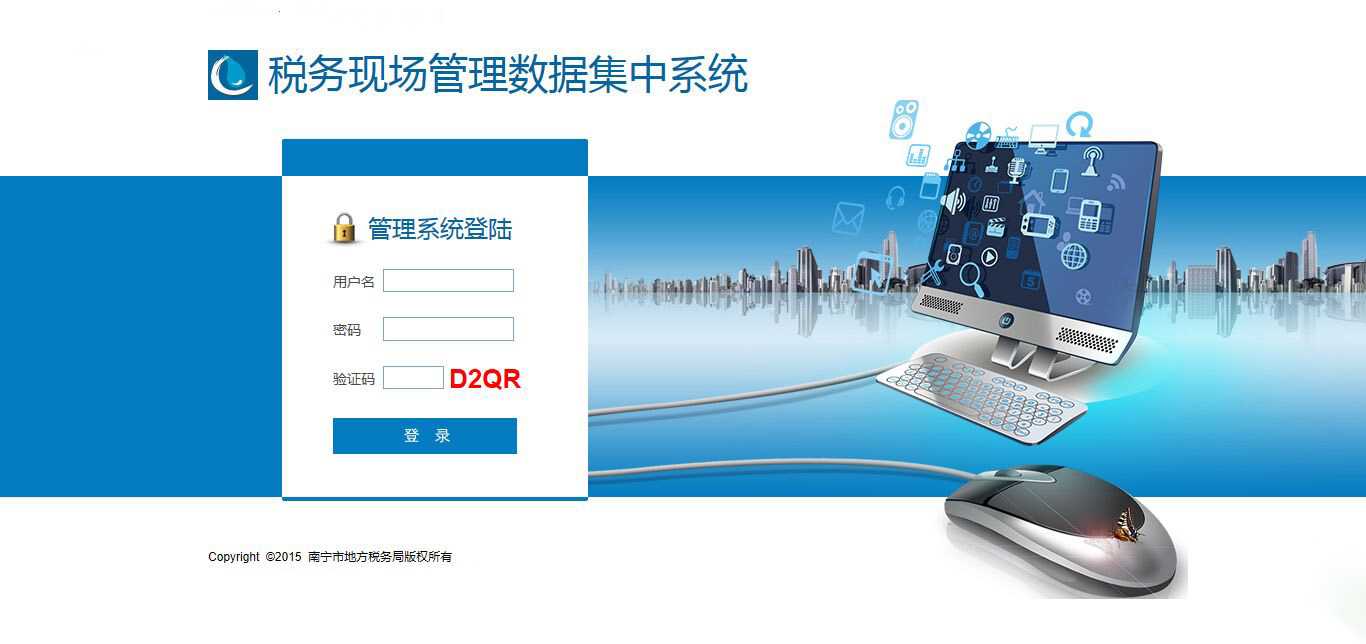
Tax Service Hall Management Centralized Data System
Published: 2016-03-02
Background
According to the requirements of the Golden Tax Phase III project from the State Taxation Administration, Nanning Tax Bureau has deployed various service equipment in tax service halls, such as queue management systems, dual-screen terminals, self-service tax machines, etc. The proper functioning of these devices directly affects the quality of taxpayer services and taxpayer satisfaction with tax authorities. Currently, these devices are provided by different vendors, operating independently, which is not conducive to unified management and coordination by tax authorities. Therefore, the development of a tax service hall centralized data management system was proposed to centrally manage the operational data of taxpayer service equipment, monitor these devices in real-time, and analyze operational data to improve the service level of tax authorities and the work efficiency of tax service hall staff.
Objectives
The system serves the auxiliary office equipment in 39 standardized tax service halls in Nanning. By extracting relevant information and monitoring and analyzing the operational status and data of these devices, the system aims to facilitate performance evaluation of tax service hall staff. Simultaneously, monitoring these devices ensures that the working environment and office equipment in tax service halls remain under supervision, allowing for quick notification to relevant personnel for timely replacement or upgrades when failures occur.
Overall Solution
The system adopts a "centralized data, distributed application" design approach, where the application system and database are deployed centrally in Nanning Municipal Tax Bureau. Each county/district bureau can access the application server via browser (B/S mode) within their authorized permissions.
Data Centralization
Data from tax service halls are centralized in the data center. The comprehensive data center is built at the municipal bureau. Through real-time replication tools and scheduled extraction commands, data from dual-screen terminals, self-service tax terminals, video playback systems, touch screen systems, video monitoring systems, etc., are centrally replicated to the database, forming the original core data of the service halls.
Anomaly Monitoring
By real-time monitoring of equipment in tax service halls, the system keeps track of device power status, network conditions, operational status, and content correctness. Computer-assisted monitoring allows immediate detection when failures occur, minimizing impact and replacing manual inspection work, thereby greatly improving operational efficiency.
Application Effects
Centralized Data Management
Centralizing data that was previously scattered across various systems provides comprehensive analysis of tax service hall operations. Through cross-comparison and comprehensive analysis of data from different systems, relationships between foot traffic and business volume can be determined, helping predict peak business periods and the impact of tax policies on foot traffic and business volume.
Report Visualization
Statistical analysis of data and equipment from dual-screen terminals, self-service tax terminals, video playback systems, touch screen systems, and video monitoring systems in tax service halls. This provides powerful reference data for leadership decision-making analysis and improving taxpayer service quality.
Equipment Fault Inspection
Using computerized methods to inspect equipment and networks in tax service halls detects equipment and network failures more promptly than manual inspection, reducing staff workload and improving work efficiency.
Client Feedback
1. Centralized data management not only improved the situation of asymmetric and non-unified information but also enhanced work efficiency and solved the problem of cross-system data query and comparison.
2. Cross-system data comparison provides a more comprehensive understanding of the actual situation in tax service halls, helping improve taxpayer service levels and taxpayer satisfaction.
3. Automated risk monitoring and notification helps enhance risk prevention awareness and optimizes work methods and approaches.